

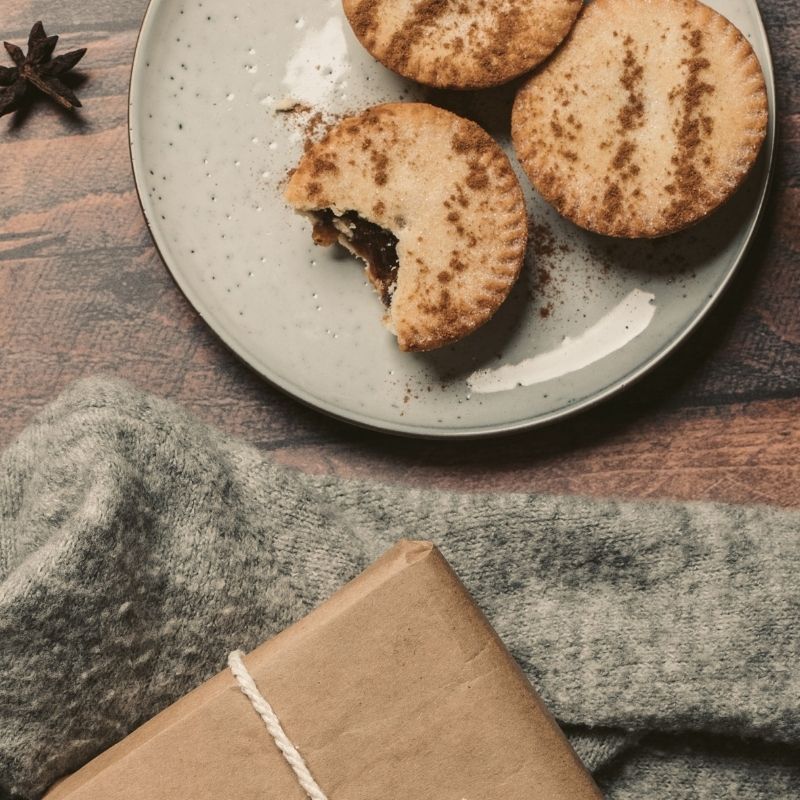
Mince pies: All about their origins
11 December, 2020
You know, the other pies. The ones we eat at Christmas
It’s no secret Aussies love a pie.
Tucking into a piping hot meat pie with a big dollop of tomato sauce is as Australian as…. rolling out traditional English Christmas desserts each and every year. And while our collective cultural palate is expanding and changing to incorporate every Aussie’s version of Christmas, for many it really wouldn’t be Christmas in Australia without fruit mince pies.
But does anyone except your Nan actually eat them?
And why are they called mince pies when there isn’t an ounce of mince to be found?
The humble mince pie has been around forever
The humble mince pie has been around since the 13th century. While it’s true that crusaders returning from the Middle East brought back recipes containing meat, fruit and spices, the pies are a true British invention.
Pie crusts in the 12th century were originally made from an unappetising recipe of flour and water, and sometimes fat. Called coffyns (no we’re not kidding) they were largely inedible, serving only as a means to keep the contents moist and good to eat. This is why they’re often referred to as medieval Tupperware.
Then the mince pie gets written about by a King’s cooks
A medieval cookbook, The Forme of Cury, believed to be the oldest English language cookbook and written circa 1390 by the master-cooks of King Richard II, has a recipe for ‘tartes of flessh’. (Yeah, we raised an eyebrow too.)
But there they are. Medieval mince pies. Or ‘minched pie’ as they came to be known.
To make these tasty morsels, the cook was directed to grind up pork, throw in some hard-boiled eggs and cheese before adding spices, sugar and saffron.
By the 17th century, Gervase Markham’s The English Huswife, circa 1615, called for cooks to use a whole leg of mutton, three pounds of suet as well as salt, mace, cloves, prunes, currants, raisins, dates, and orange peel.
Yeah okay. That’s a whole lot of things going on for the modern palate. And these were definitely not the delicate mince pies we know and love today.
It’s beginning to seem a lot like Christmas
As the years passed, bold cooks experimented with flavours, seeing who could make the tastiest, most delicious mince pies. We reckon it was kind of like a medieval MasterChef.
But back to the pies….
By the middle of the 17th century, people ate mince pies all year round, but they started to be associated with Christmas. People expected to see mince pies on the Christmas menu.
During Oliver Cromwell’s reign of England, eating mince pies even became political. Now, we don’t know about you but in 2020, we’ve had about all the politics we can handle. However, if you’re keen and we’ve piqued your mince pie curiosity, Google awaits.
During the late 1800’s, using meat fell out of fashion and spices, fruits and suet were the main ingredients.
And that’s pretty much how it remains to this day. We still experiment with flavours but our sweet, little pies haven’t changed a great deal over the last 150 years.
Mince pies – a tradition that’s still here
At the start, we asked if anyone other than Nanna still ate mince pies.
It would seem so.
Mince pies remain one of the most popular Christmas desserts, as evidenced by Woolworths carrying at least six different varieties.
With minor mini makeovers to tempt modern tastebuds, we don’t think the humble mince pie is going anywhere soon.
