

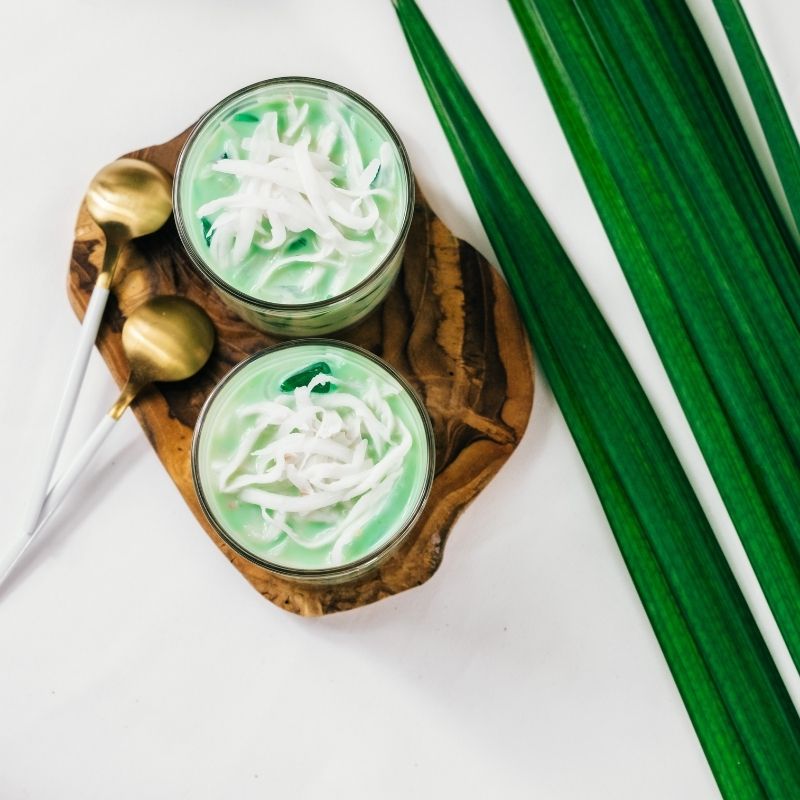
What is the Pandan leaf?
28 May, 2021
This versatile ingredient will satisfy your sweet tooth
If you’re a fan of South East and Southern Asian cuisine, chances are you’ve eaten this nifty ingredient that can be used in everything from curries to cakes and everything in between. Known for its deep green, almost emerald, hue, what is the pandan leaf? What does it taste like and where can you buy it?
The Pandan leaf
Pandan (Pandanus amaryllifolius) is a tropical plant that grows right across southern Asia. The long, dark green, sword shaped leaves might remind Aussies of its close relative, the Pandanus tree, that we find up and down our eastern coastlines.
While there’s around 600 species of the plant, not all of the leaves are edible.
However, there are some species that grow in India and the Philippines that produce edible fruits that look like big, chunky, red pinecones. Pandan fruit can also be eaten raw or made into a very nutritious paste.
Although best used fresh, you can find pandan frozen and dried, as an extract or paste and even used a tea.
Pandan leaves are used for their colour and fragrance, as well as their flavour which is a sweet, grassy vanilla taste with a hint of coconut.
How do you use pandan leaf in cooking?
Fresh, pandan leaves are used to wrap foods before steaming or frying. The same way banana leaves are used to cook foods. The sweetness of the leaf is then absorbed into the food, giving it that ‘hint of’ taste.
The leaves can also be boiled or juiced but are usually pulverised to make an extract or powder. The extract is emerald green, which is why the colour is as highly prized as the flavour. The more mature the leaf when harvested, the deeper the colour and the flavour.
If you’ve eaten sweets or desserts from Thailand, Vietnam, Indonesia, Malaysia or the Philippines, you’d be familiar with the sweet, vanilla scent and flavour of pandan.
If you love syrupy pancakes, you’ll love Pandan pancakes with spice syrup and bananas. Or what about these Sugar-stuffed glutinous rice balls (onde-onde), which remind us of the Japanese new year delicacy mochi.
And how about this for the ultimate Aussie/Asian fusion? Pandan lamingtons!
Pandan pairs naturally with other flavours of southern Asia such as lemongrass, palm sugar, turmeric and coconut milk.
Moving away from the sweet recipes, why not try the Pandan-scented chicken and tomato curry (ayam masak merah) and of course, it’s regularly used to flavour the coconut rice to go with the Malaysian staple, nasi lemak.
Where can I buy pandan?
We recently picked up some pandan muffins from Asian City and they were delish! They also stock the leaves in the freezer cabinet. As always, you can pick up all your ingredients from Woolworths who also stock ready-made pandan cakes and a pandan soya drink.
Pandan has health benefits too
The people of Thailand have long known about the health benefits of pandan leaves. Pandan leaves and roots are boiled to make a tea. The teas is said to help with headaches, chest pains, cramps, spasms and is even said to lower blood pressure.
They can also be made into traditional medicine used to treat arthritis, certain skin conditions and other ailments.
Isn’t it about time you introduced this gorgeous little green leaf into your cooking world?
